
Swift Solar acquires Meyer Burger HJT assets to accelerate U.S. tandem solar manufacturing
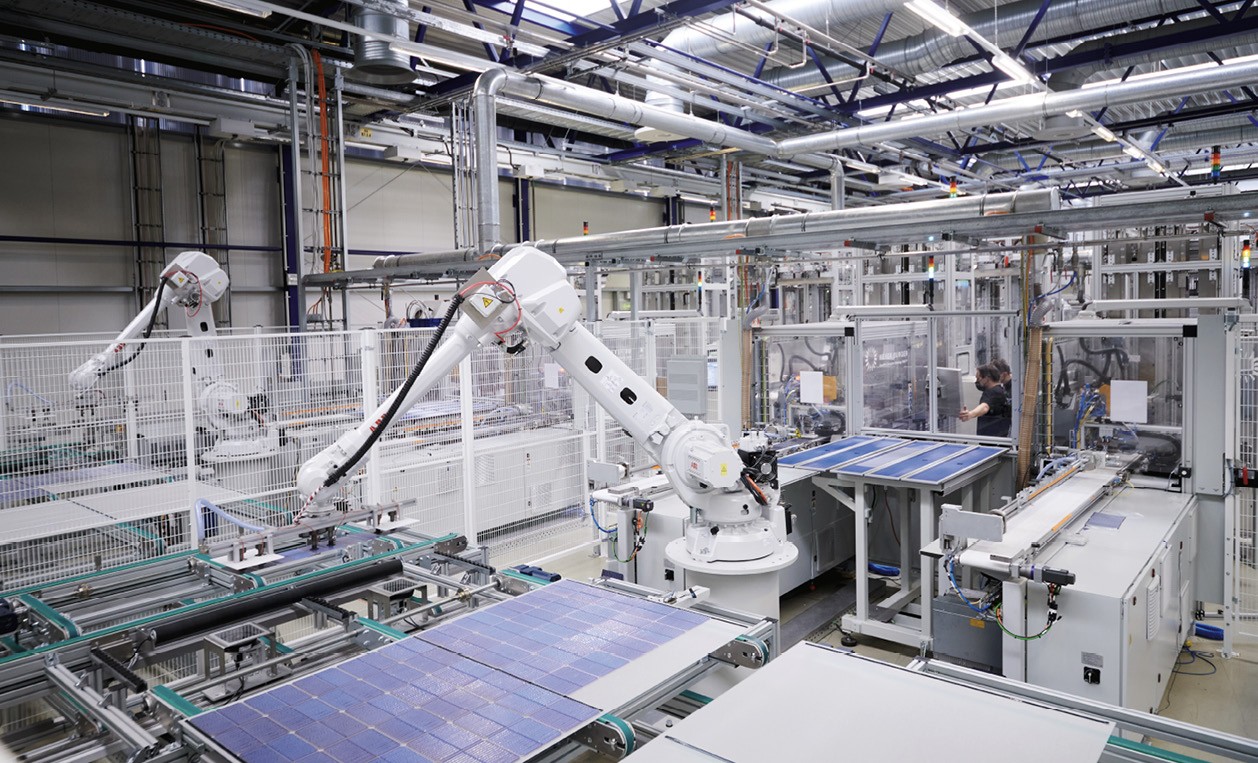
Image: Meyer Burger
California-based Swift Solar has announced the acquisition of core manufacturing assets and the heterojunction (HJT) patent portfolio from Swiss photovoltaic manufacturer Meyer Burger, marking a significant step in the company’s plans to scale gigawatt-level solar production in the United States.
The deal includes the transfer of Meyer Burger’s specialized engineering team and senior leadership to Swift Solar. The move is intended to support the company’s transition toward large-scale domestic manufacturing while advancing its silicon–perovskite tandem solar technology.
Building a vertically integrated tandem platform
The acquisition gives Swift Solar a vertically integrated pathway for developing silicon–perovskite tandem cells. HJT is a high-efficiency silicon solar cell architecture that can serve as the base layer for tandem modules.
By stacking a perovskite layer on top of an HJT bottom cell, Swift Solar aims to exceed the practical efficiency limits of conventional silicon solar technology, which currently approach around 30%. Tandem designs allow two different photovoltaic materials to capture different parts of the solar spectrum, potentially boosting overall energy conversion efficiency.
Meyer Burger leadership joins Swift Solar
As part of the transaction, several senior leaders from Meyer Burger will join Swift Solar to guide the integration of the HJT technology.
Gunter Erfurt, the former chief executive officer of Meyer Burger, and Marcel Koenig will take leading roles in incorporating the HJT platform into Swift Solar’s manufacturing roadmap.
Swift Solar said the deal secures what it described as the most extensive HJT intellectual property portfolio in the Western Hemisphere. The company noted that securing “freedom to operate” is essential for scaling manufacturing while minimizing potential intellectual property disputes, which have historically complicated investments in advanced photovoltaic technologies.
Addressing U.S. solar manufacturing gaps
The acquisition also reflects broader shifts in the U.S. solar supply chain. While the United States has seen rapid growth in module assembly facilities in recent years, solar cell manufacturing capacity remains largely concentrated in Asia.
Swift Solar said the transaction helps address this gap by enabling domestic cell production based on HJT technology. Unlike some other silicon solar technologies, much of the specialized equipment used in HJT manufacturing can be sourced and built outside of China, which aligns with current U.S. policy priorities aimed at strengthening domestic clean energy supply chains.
The company added that demand for high-density power generation is rising, driven in part by the rapid expansion of artificial intelligence data centers and broader electrification of the power grid.
Roadmap to commercialization
Swift Solar outlined a phased strategy for bringing its tandem technology to market:
HJT scale-up: Establish a gigawatt-scale HJT cell and module factory in the United States to meet growing demand for domestically produced silicon cells.
Tandem integration: Introduce Swift Solar’s proprietary perovskite technology into the HJT manufacturing lines to produce two-terminal tandem solar cells.
Efficiency gains: Use the tandem architecture to deliver up to 40% more power from the same module footprint compared with conventional modules operating at 20% to 24% efficiency.
“We are combining German silicon manufacturing expertise with American perovskite technology leadership,” said Joel Jean, chief executive officer of Swift Solar.
The company added that its tandem solar products have demonstrated durability in more than 3,000 hours of high-temperature testing, addressing long-standing concerns in the solar industry about the long-term stability of perovskite materials.


Recommended News
View More


Join Us