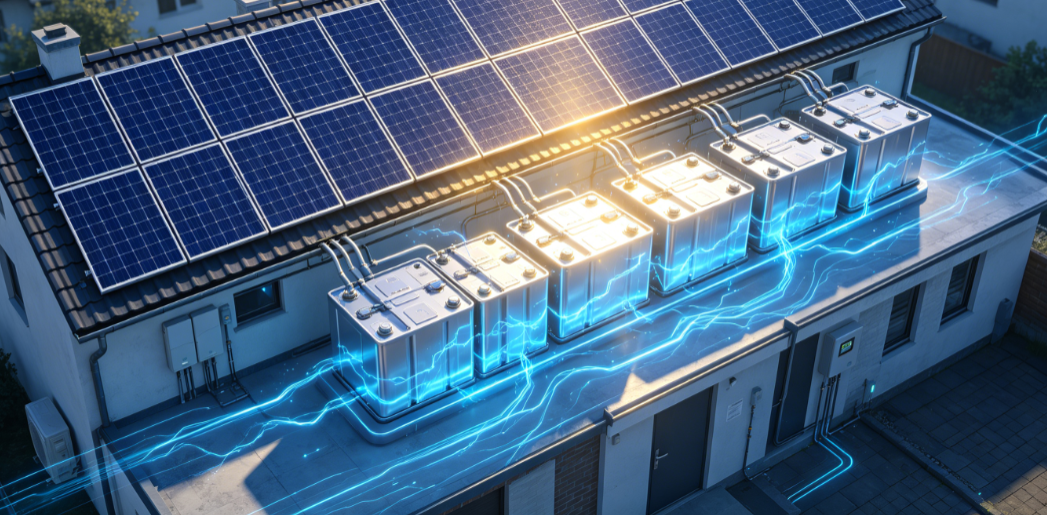
Cambridge-based clean technology startup Eleven Energy has officially launched its new integrated residential sodium-ion energy storage solution at the 2025 Smarter E exhibition in Munich, marking one of Europe’s first large-scale real-world deployments of sodium-ion technology for household energy storage.
Backed by a nationwide network of over 100 certified installation partners, the company’s sodium-ion storage systems have already been successfully deployed in hundreds of residential properties across Europe, validating the commercial viability and practicality of its tailored stationary sodium-ion storage technology.
Breaking from the traditional industry model of generic, chemistry-agnostic “drop-in” batteries, Eleven Energy’s new offering adopts a tightly coupled hardware and software co-engineering approach. The fully integrated solution comprises custom-built sodium-ion battery modules, hybrid inverters optimized for sodium-ion unique voltage characteristics, and an AI-powered intelligent energy management platform, delivering comprehensive optimization for energy self-consumption, tariff arbitrage and long-term system durability.
The sodium-ion design achieves exceptional discharge efficiency, offering 92% usable capacity for grid-tied operation and up to 95% for off-grid backup scenarios. Boasting an IP65 weatherproof rating, the modules support both indoor and outdoor installation, with a broad temperature adaptability ranging from -20°C charging to -30°C discharging. This superior cold resistance eliminates the need for energy-intensive thermal management systems required by conventional lithium-ion storage systems in low-temperature environments, greatly reducing operational energy consumption and maintenance costs.
Complementing the battery hardware, the company has launched a full portfolio of dedicated single-phase and three-phase inverters tailored to sodium-ion system dynamics. The product lineup covers 3.6–6 kW compact models for standard residential use, 8–12 kW high-power units for heavy-load households, and 12 kW three-phase systems suitable for large homes and light commercial scenarios. These inverters support up to 18 kW PV input and multi-MPPT tracking, with dual battery ports on flagship models to enhance system compatibility and expansion flexibility.