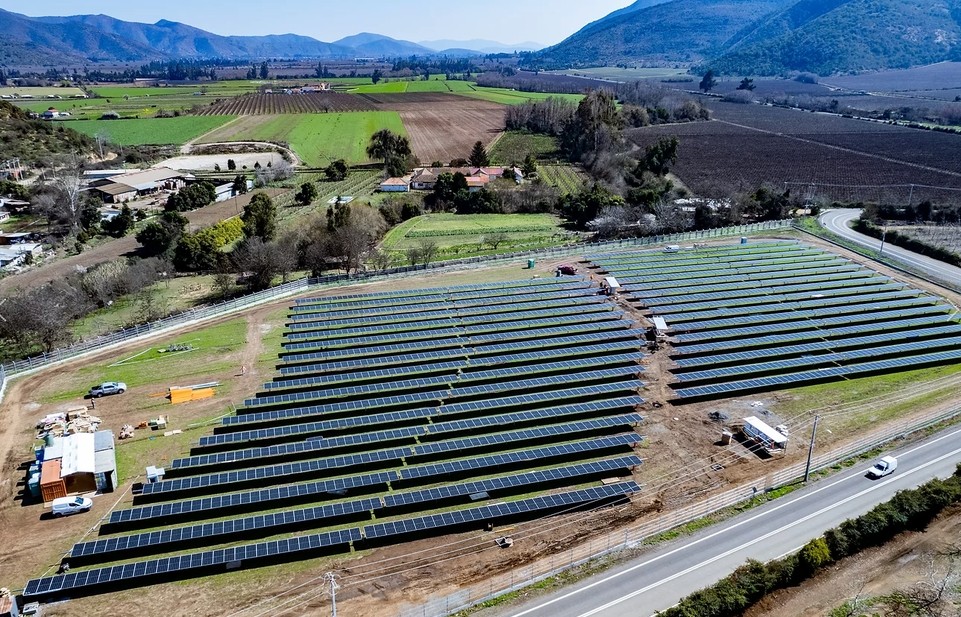
New statistics compiled by Chilean solar association Acesol, drawing on official data from the Superintendency of Electricity and Fuels (SEC), reveal that the country’s Net Billing scheme reached 502.9 MW of operational capacity by May 31, 2026. Solar photovoltaic assets make up 501.9 MW of this total figure, cementing PV’s overwhelming dominance in Chile’s grid-connected self-consumption market.
Since the launch of the Net Billing framework in 2015, authorities have registered 41,986 distributed generation installations nationwide, among which 41,962 are solar systems. In the first five months of 2026 alone, the sector added 56.1 MW of fresh capacity and 3,913 new PV setups, reflecting steady expansion of on-site power generation across the nation.
Regional data underscores the Metropolitan Region as the core of Chile’s self-consumption rollout. It holds 146.3 MW of cumulative Net Billing capacity and 14,723 individual installations, leading all other territories. Valparaíso ranks second with 74.7 MW capacity and 4,852 systems, followed by Maule at 60.4 MW and 3,793 units, O’Higgins with 60 MW total capacity, and Biobío recording 3,306 installed systems.
Looking at new capacity added from January to May 2026, the Metropolitan Region once again led the country with 16.1 MW of new deployments. Valparaíso followed with 8.7 MW, O’Higgins added 6.6 MW, Maule registered 5.4 MW, and Ñuble closed out the top five with 3.4 MW of new assets. May’s monthly new capacity stood at 10.3 MW, lagging behind January’s 14.6 MW and March’s 13.6 MW additions.
When segmented by system size, mid-range facilities between 200 kW and 300 kW contribute the largest share of total capacity at 193.7 MW. However, small-scale rooftop units dominate installation volumes: 38,187 systems fall into the 0–10 kW category, accounting for the vast majority of all 41,986 cumulative projects.
Integrated energy storage paired with Net Billing solar remains in the early stage of development. As of May 31, cumulative battery energy storage system (BESS) capacity attached to self-consumption assets totalled just 201 kWh, deployed across projects commissioned from 2024 through 2026. Regionally, the Metropolitan Region hosts 75 kWh of installed storage, Maule has 32 kWh, and Ñuble holds 28 kWh.