Chinese vertically integrated solar manufacturer Trinasolar has kicked off mass production of its tailor-made 515W photovoltaic panel targeting residential and commercial rooftop applications in Australia, with initial shipments scheduled for this month.
The new Vertex S+ G3 515W (model NEG10R.28Z) module has obtained official certification from Australia’s Clean Energy Council (CEC), qualifying it for installation under the Small-scale Renewable Energy Scheme (SRES). Built on Trinasolar’s n-type i-TOPCon Ultra cell technology deployed for its European Vertex S+ G3 lineup unveiled earlier in 2026, the tunnel oxide passivated contact structure optimizes electron capture and cuts surface power loss.
Boasting a conversion efficiency of 24.7%, the panel measures 1,842mm × 1,134mm, matching the physical size of mainstream 475W modules while delivering notably higher power output. Its zero-gap dense cell layout and low-voltage architecture enable flexible string configuration, supporting 18 to 20 modules per string for installers. Engineered for Australia’s harsh weather conditions, the dual-glass panel features a temperature coefficient of -0.26%/°C, 5,400 Pa snow load resistance and 4,000 Pa wind load resistance. Trinasolar offers a 25-year product warranty and a 30-year power output warranty for the product.
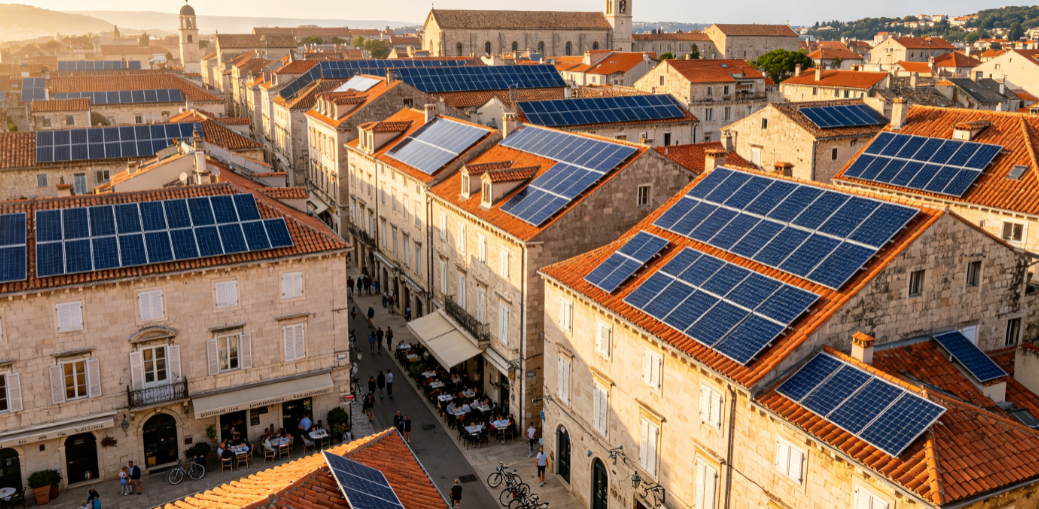
Edison Zhou, Head of Australia at Trinasolar Asia Pacific, explained the product is customized to fit local market traits. Dense housing, small land parcels and intricate rooftop structures in Australia require solar panels to maximize power generation on limited roof areas while ensuring easy installation.
The Australian product rollout arrives amid widespread financial pressure across China’s solar module industry. Public Chinese PV firms posted total losses surpassing RMB 10 billion in the first half of 2026, weighed down by industrial overcapacity and sustained low panel prices. Trinasolar outperformed many competitors, narrowing its H1 2026 net loss by 88% to 94% year-on-year. The company credits the turnaround partly to its strategic pivot to high-end markets and premium product orders.